
An animal you can walk up to is worth more than an animal you can photograph. Everything that leaves this farm is handled daily, used to people, and comfortable being caught, led and loaded.
Almost everyone chooses their first animal on looks. Almost everyone, a year later, would trade a colour they loved for an animal that lets them near it.
Handling is what stands between you and every ordinary task: a vet visit, a hoof trim, moving between paddocks, checking an eye, getting onto a float. With a handled animal each of those is a quiet ten minutes. With an unhandled one they are a problem you solve at the worst possible moment, usually in poor light, usually alone.
With horned cattle it stops being an inconvenience and becomes a safety question. A Highland that trusts you keeps its head still. One that does not is unpredictable in a way that horns amplify. The horns are rarely the danger. Fear is.
None of this is clever. It is the same small things, repeated, by people who are in the paddock anyway.
Calves and kids are handled from the first days, while they are small enough that learning is safe for everyone. An adult learning for the first time is a different exercise entirely.
Five minutes daily beats an hour on Sunday. We stop while it is going well rather than when it has fallen apart, which is the part most people get backwards.
Every animal is used to having its feet picked up and its head handled. That single habit turns your first hoof trim from a wrestling match into an afternoon.
Cattle leave here worked in the yards and used to loading — moved, drafted, penned and walked onto a float without a fuss. We start with presence, then touch, then yielding to pressure, then loading. Some animals go further and are halter trained; when one has, we tell you, and when one hasn't, we tell you that too.
Our animals are handled by adults and children both, which is a harder test than it sounds and a useful one. An animal that is fine with us and jumpy with a child is not finished.
Handled is only half of it. Every species we run is a herd or flock animal, so we sell in pairs or into established company. A settled animal is easy; a lonely one is not.
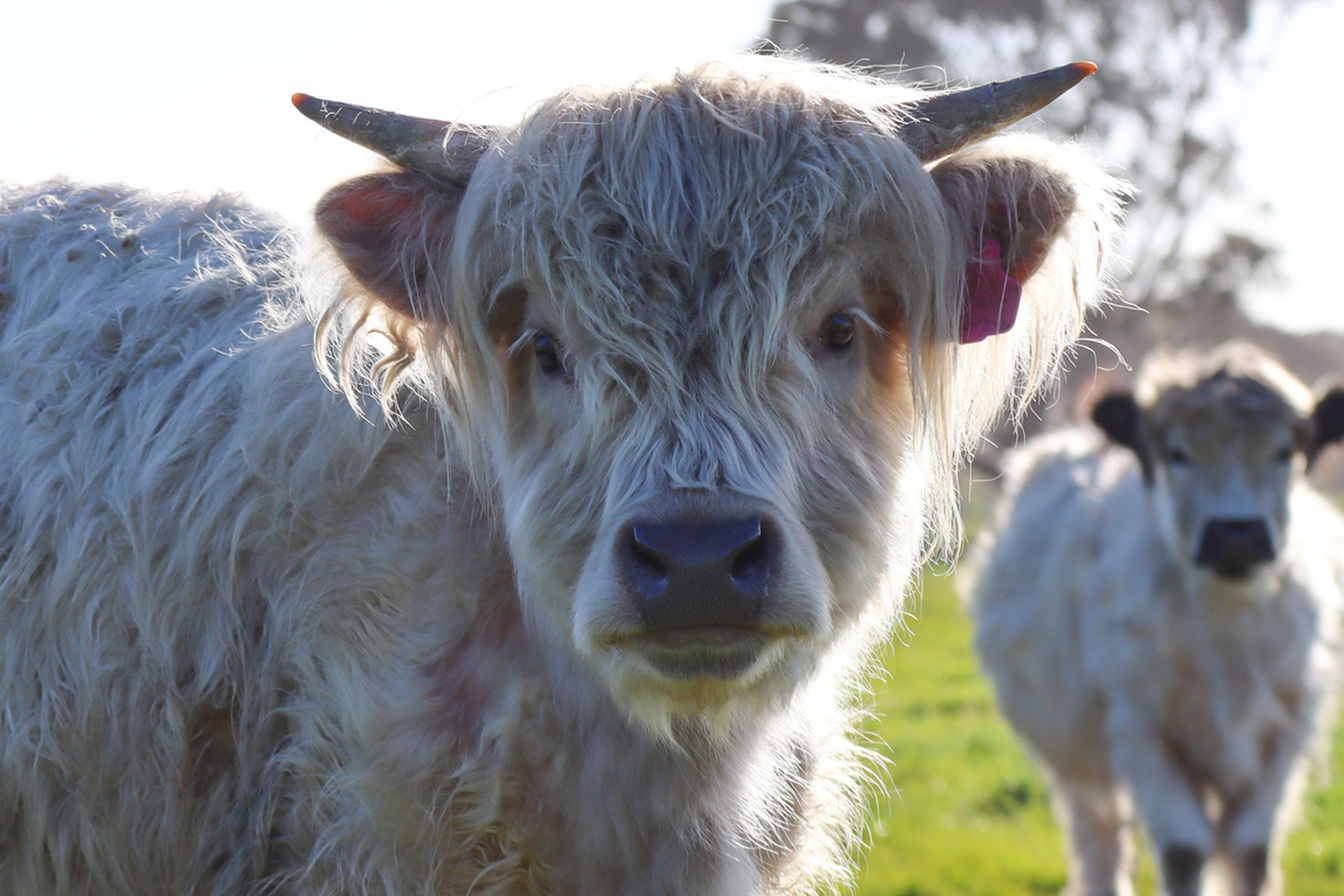
Not "they're very friendly" — which every breeder says — but the specifics. Whether she leads. Whether she has been on a float. Whether she will let you pick up a foot. Whether she is confident with strangers or takes a day to settle.
Where an animal is still learning something, we say that too. It is far better for you to arrive knowing she is green on the halter than to find out in your own yards.
And handling does not stop at the gate. Animals go backwards without contact — an animal that arrives handled and is then left alone in a paddock for six months is not a handled animal any more. We will tell you what to keep doing, and it is less than you think.
Ask us anything, forever. We would genuinely rather you rang.