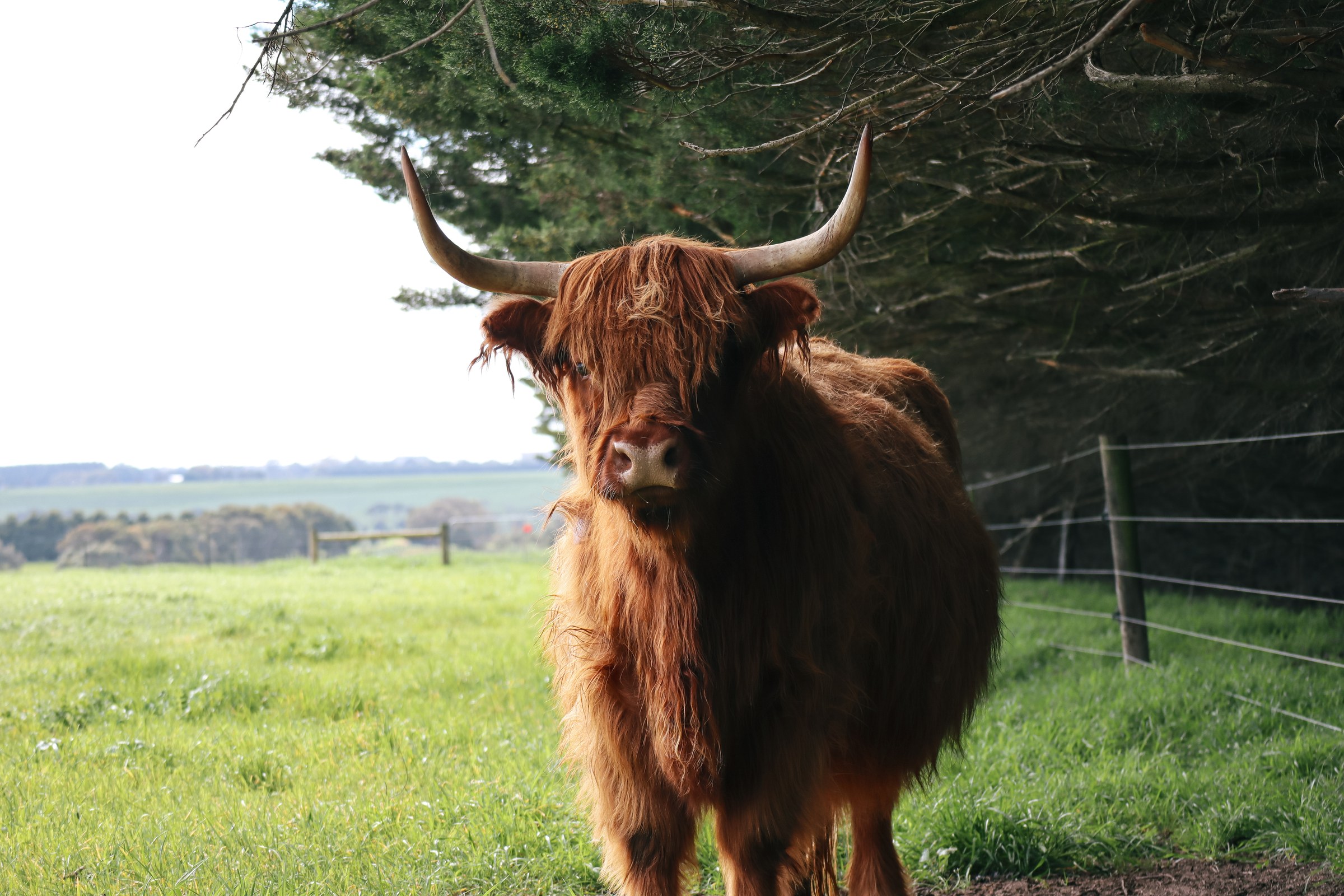
Fluffy, true-to-type Highlands with exceptional genetics and personalities that will steal your heart. Registered with the Australian Highland Cattle Society and the Poll Highland Society, bred under our Valinor Estate prefix on a small farm on the Victorian coast.
Highlands are Scotland's oldest registered cattle breed — hardy, long-lived, remarkably efficient on rough feed, and famously good-tempered when handled properly. The double coat, a coarse outer layer over a soft undercoat, means they handle cold and wet without shelter. It is also why they need shade and good management through an Australian summer.
Coastal Victoria is a far kinder climate than the one Highlands were built for, and that cuts both ways. Our winters are wet rather than bitter, which suits them — they'll stand out in weather that has other breeds at the gate, and hold condition on feed those breeds would walk past. Summer is the part to plan for. A double coat that earns its keep in July is a liability in a February northerly, so shade and clean water matter more than anything else you will do for them. They shed most of that coat over spring; what they can't shed, you manage with trees and a trough that doesn't run dry.
Horn set first: horns that sweep up and out, even on both sides, with clear space from the eye. Then coat — a true double coat, a coarse outer layer over a soft undercoat, not one long fleece that holds the wet. Frame we like moderate and deep rather than tall; a Highland that grows up instead of out loses the efficiency that makes it worth keeping. Colour should be the last thing that decides a purchase. Red, black, dun, brindle, silver and yellow are all correct, and not one of them changes how the animal does in your paddock.
Every animal handled daily and worked in the yards. Genetics matter, but an animal that cannot be handled is neither a pet nor a foundation animal.
It helps to know what the terms mean before you start looking. A full-blood Highland is pure Highland on both sides with the pedigree to prove it. An appendix animal carries Highland blood but not full pedigree — it sits on an appendix register rather than in the main herd book, and the percentage tells you how far along that path it is. Polled means bred without horns; it's an inherited trait, not something done to the animal. None of this makes an animal better or worse in the paddock. What it changes is what you can do with it afterwards. Registered animals are registered, appendix animals are called appendix animals, and percentages are stated plainly.
Matings here are decided one animal at a time, on temperament, coat and frame rather than on a name that reads well. If there's a particular animal you're interested in and you want to know exactly what's behind it — sire, dam, and why that mating was made — ask us and we'll tell you.
We wrote the guide we wish we'd had — 41 pages on choosing, buying, transporting and keeping Highland cattle in Australia. It's free.