
Drysdales, Babydoll Southdowns, and the first generations of our Valais Blacknose breed-up. Two of those are established flocks. The third will take the better part of a decade, and we're documenting all of it.
Horned, coarse-fleeced and hardy — a carpet-wool breed that does exactly what it says. [Add why you keep them and what you do with the fleece.]
Small, round, and permanently smiling. Excellent orchard and small-block sheep, and the easiest introduction to keeping sheep at all. [Add your lines and what you have available.]
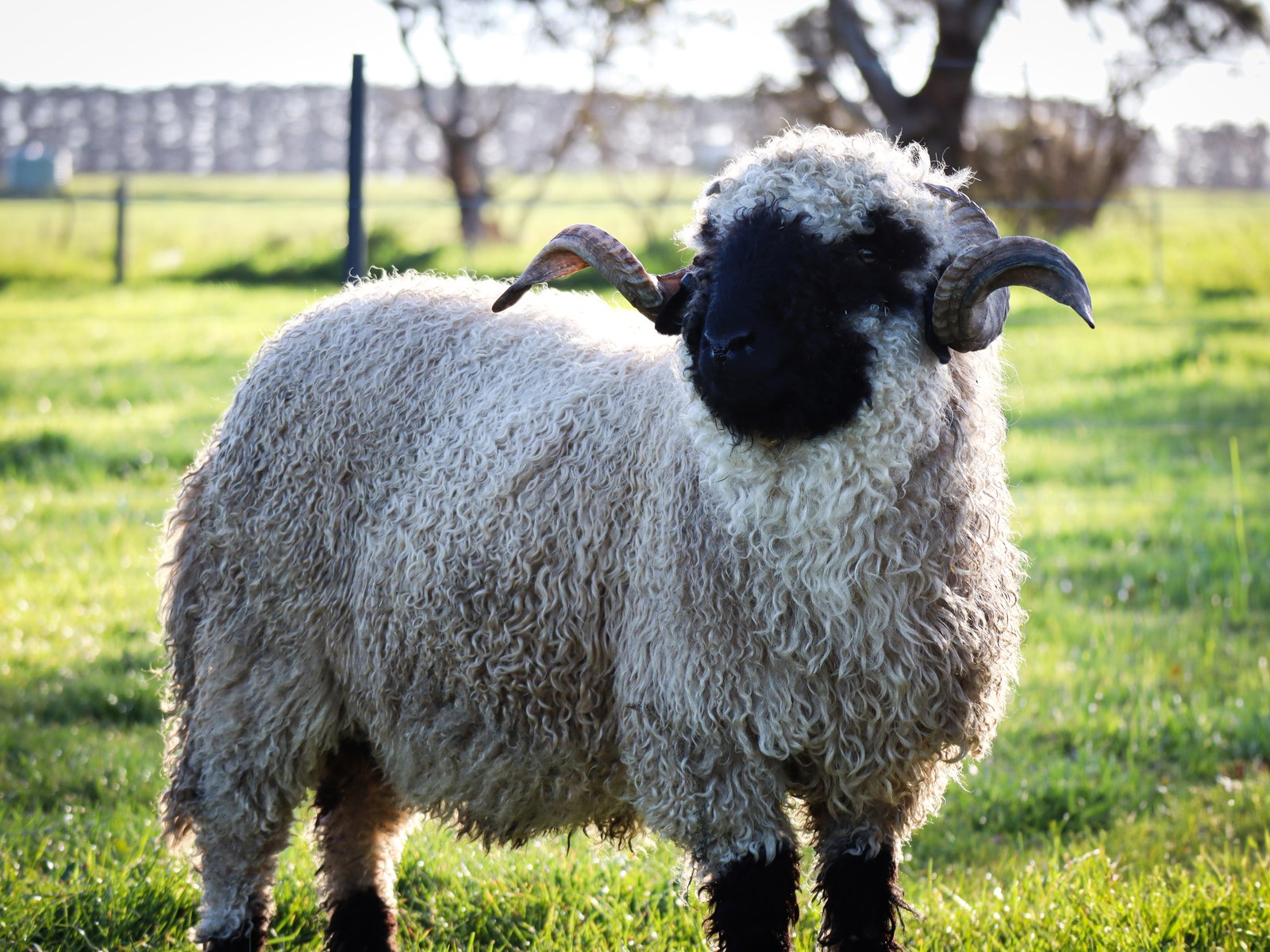
The reason people stop the car. We have Valais genetics on the ground and our first F1s — the beginning of a multi-generation breed-up. The ladder below explains exactly where we are.
Valais Blacknose can't simply be bought and shipped to Australia, so every Australian flock is built the slow way: Valais genetics over ewes of another breed, then the daughters bred back to Valais, generation after generation.
First cross. A promising sheep, not a Valais. This is where we are now.
The face markings start showing up properly.
Recognisably Valais to most people.
Very close. Still not there on paper.
Eligible for Australian Breed-Up Pure (A Class) status — treated as equivalent to purebred for showing.
Percentages follow the standard breed-up series and the A Class threshold described by Valais Blacknose Australia. The registry's rules govern, and they change — confirm the current requirements before relying on anything here.
An F1 is not a Valais Blacknose. It's a 50% Valais Blacknose cross, and it will look like one. Anyone selling you an F1 as "a Valais Blacknose" is not being straight with you.
Breed-up is slow, expensive, and doesn't always go to plan — rams throw what they throw. We publish the percentages, the pedigrees and the disappointments as they happen. If you're buying in at F1 or F2, you're buying a place in a long project, not a finished sheep.